What's a climate variable?
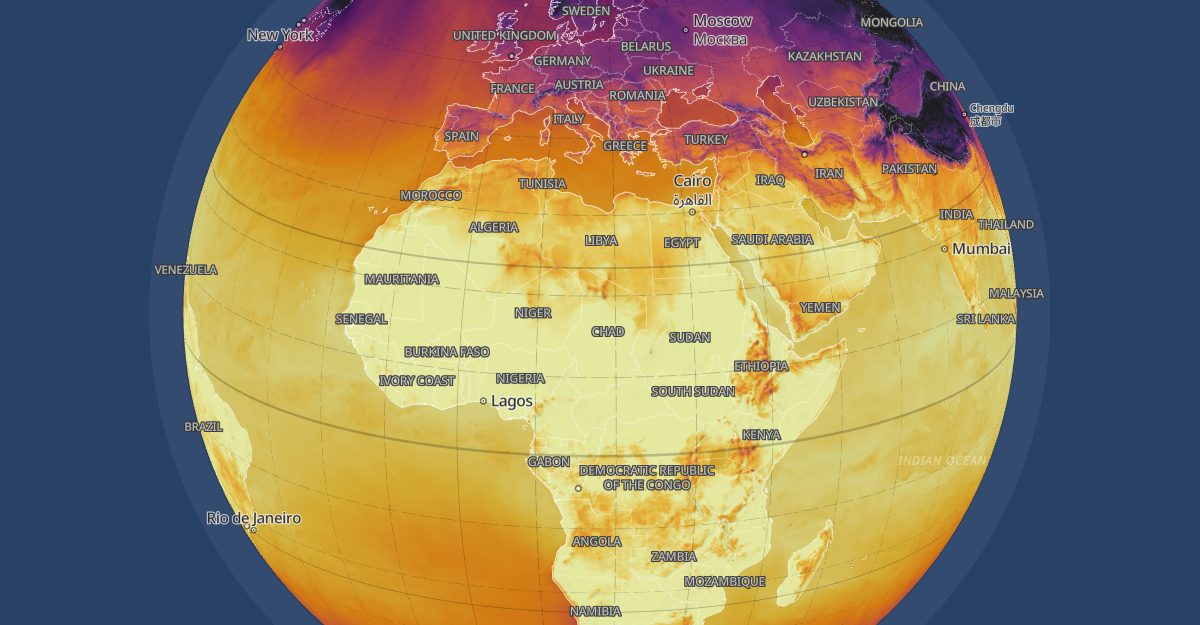
A climate variable (forecasters also say weather parameter) is one physical quantity described everywhere on Earth: the air temperature 2 metres above the ground, the wind speed 10 metres up, the pressure at sea level. stormstudio. shows one variable at a time, as colors on the globe.
Where the numbers come from
The values come from IFS, the global weather model of the European Centre for Medium-Range Weather Forecasts (ECMWF). The model starts from the latest observations, the analysis, and computes how the atmosphere will evolve over the next 15 days, on a grid of points about 9 km apart.
Height and time matter
A variable is always measured somewhere and at some moment:
- Temperature and relative humidity are given 2 m above the ground, where people live.
- Wind is given 10 m above the ground. The moving particles follow its direction.
- Pressure is converted to mean sea level, so that mountains do not hide the highs and lows.
- Precipitation and snowfall add up what fell during the previous 3 hours, as water equivalent.
- Snow depth is the snow lying on the ground, also as water equivalent.
- Total cloud cover is the share of the sky covered by clouds, at any altitude.
- Significant wave height combines wind waves and swell.
- Relative vorticity tells how much the air spins at 850 hPa, about 1.5 km up. Cyclones stand out as strong positive values in the northern hemisphere, and negative values in the southern one.
- Comfort scores how close the forecast is to the weather you like.
Reading the map
The legend in the sidebar gives the color scale and its unit. Move the timeline to watch a variable change hour after hour.
Try it: temperature over Africa, or wind over the North Atlantic.